
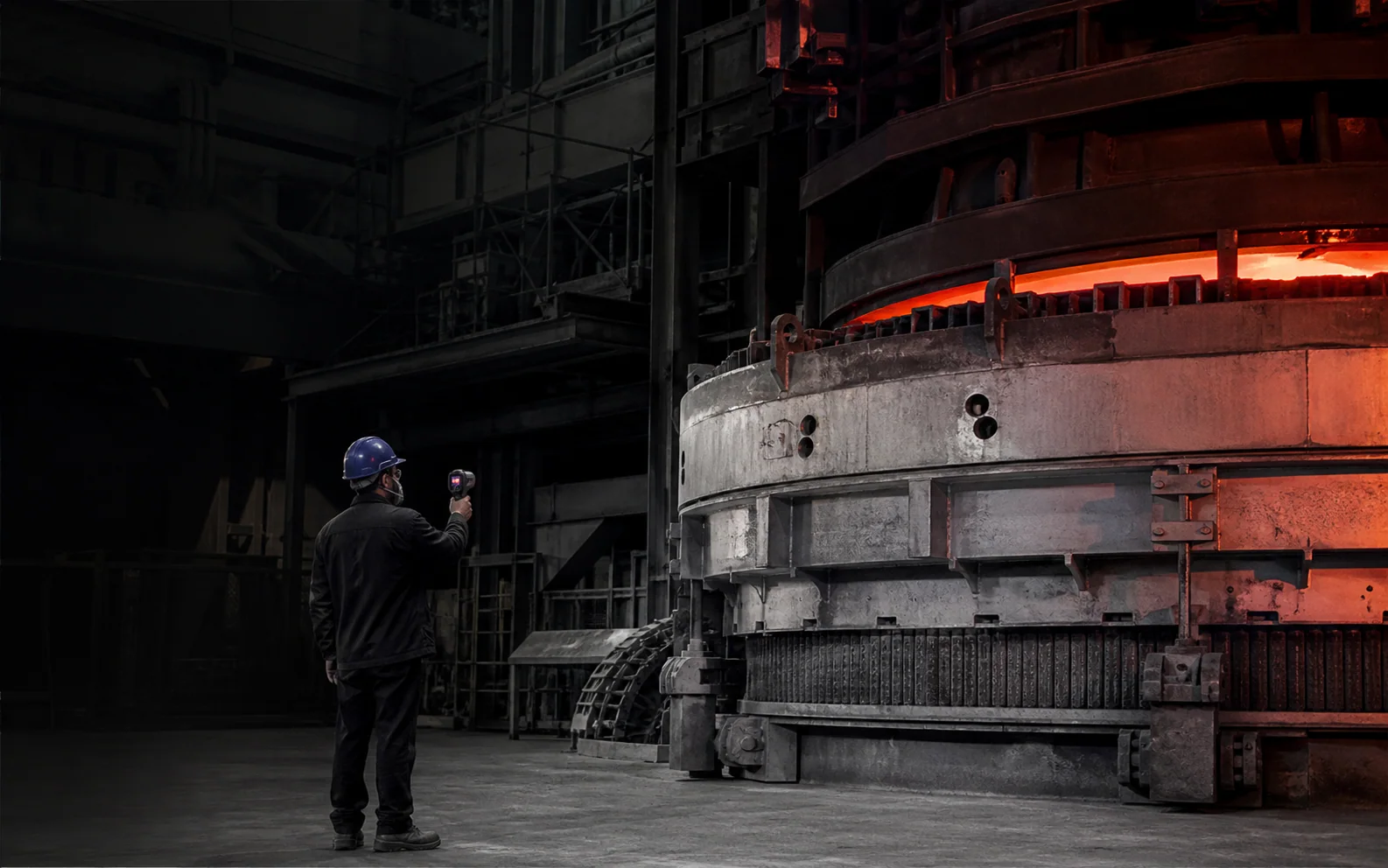
Heat escaping through the wall of a furnace has to be replaced to maintain the process. It also raises the temperature of the outer structure. Adding insulation is an obvious response, but space behind the working lining may already be constrained by the shell dimensions and the capacity required inside. Improving thermal resistance within that fixed depth becomes a practical design problem.
Microporous insulation is relevant to this problem because its fine structure limits heat transfer through the material. Small particle contacts and indirect solid paths reduce conduction, while the pore structure and opacifying components address gas-phase and radiative transfer. Used in a suitable position within a lining, it can provide thermal resistance without relying solely on a large increase in thickness.
The comparison needs to reflect the temperatures across that lining. Conductivity changes with mean temperature, so a value quoted near room temperature cannot describe a layer operating much hotter. The hot-face condition, surrounding layers and outside heat transfer determine the temperature distribution and the thickness needed to meet the objective. A continuous process may be assessed differently from equipment that heats and cools repeatedly.
The calculated layer then has to be made into a practical installation. Boards or encapsulated panels can suit regular wall areas; shaped or flexible formats may be more appropriate around curves and restricted access. Joints, supports and attachments interrupt an ideal uninterrupted layer and need to be represented accordingly. The material and its covering must also be compatible with the atmosphere and mechanical conditions at that location.
A useful insulation upgrade brings these decisions together rather than selecting a product by maximum temperature alone. The proposed lining should meet the intended heat-loss or shell-temperature target, fit the available space and remain serviceable. That is where a compact material earns its place: through a demonstrable improvement in the actual equipment, using data appropriate to its operating conditions.