
Resist the cross-cell heat path
The microporous core limits conduction, convection and radiation through a thin barrier section.
Cell-to-cell thermal barrier material
Thermal resistance and compression response in one thin cell interface.
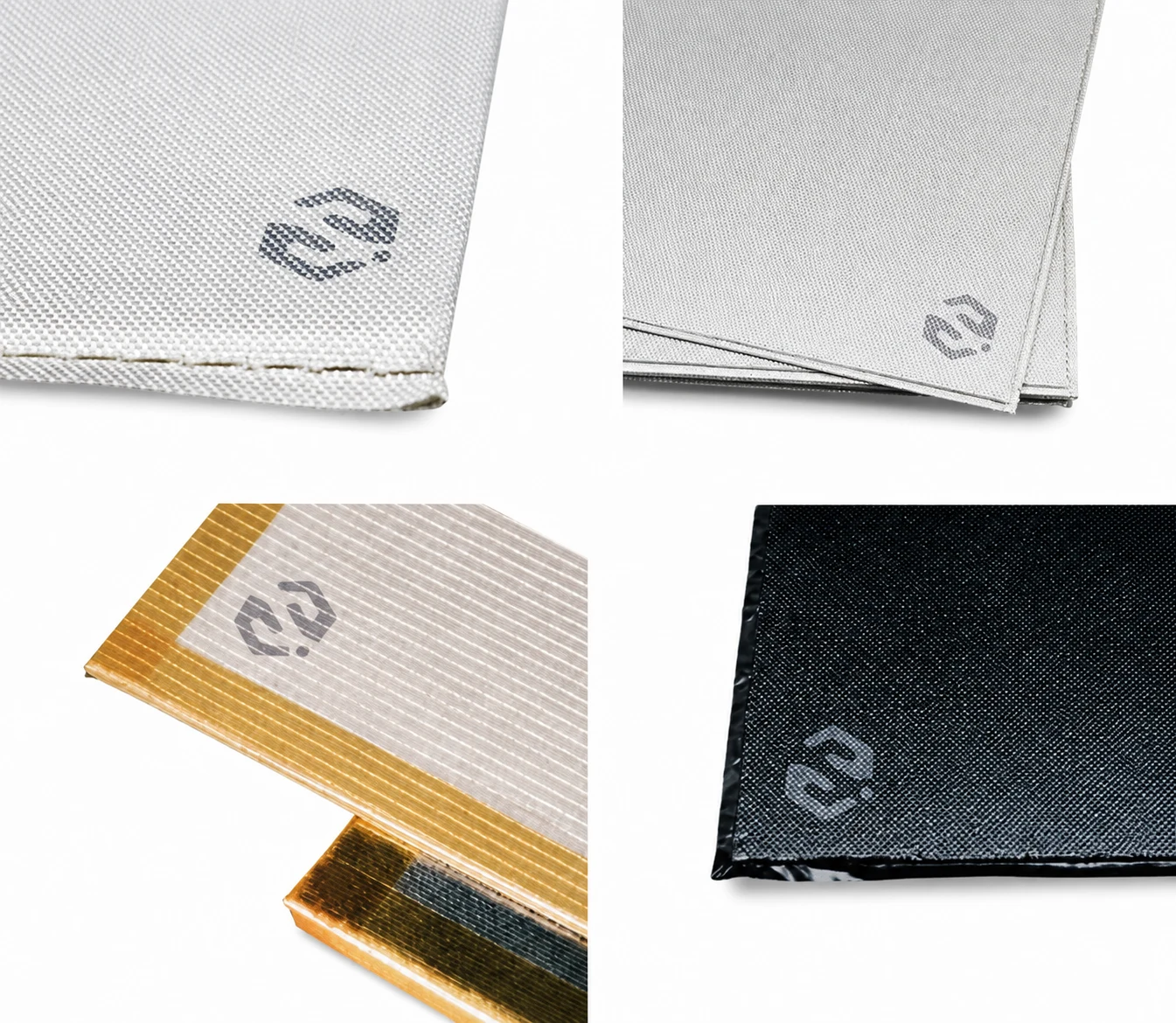
Silthin is a reinforced microporous barrier for the narrow space between battery cells. The 0.6-8 mm range combines thermal resistance with the compression response required at the interface.
Cell-to-cell integration
Between prismatic or pouch cells, Silthin resists cross-cell heat transfer while allowing for movement in the cell stack.
Open the EV battery applicationThe microporous core limits conduction, convection and radiation through a thin barrier section.
A reinforced, compressible format can be matched to cell expansion, assembly pressure and tolerance requirements.
The product record includes insulation resistance and dielectric-strength values for early interface review.
Material architecture
The opacified pyrogenic-silica matrix and dispersed reinforcement form one composite core. PET is the standard encapsulation, with other coverings available for specific interfaces.
PET is the standard encapsulation; alternative coverings can be reviewed for the application.
The opacified pyrogenic-silica matrix and dispersed filament reinforcement form one core. Together they limit heat-transfer routes while supporting handling and mechanical integrity.
Temperature response
ASTM C177 data shows the microporous core conductivity at the stated mean temperatures. The configured barrier is then validated in the intended battery assembly.
Mean-temperature values for the microporous core specimen. Battery-system performance depends on the complete product and assembly configuration.
Material selection
Mica provides electrical insulation and high-temperature stability. Silthin adds a product route that can be configured for thermal resistance and cell-stack compression in the same interface.
Mica is a proven electrical-insulation material with high-temperature capability. As a single sheet, it does not by itself define the complete thermal resistance and compression response of the cell interface.
Silthin combines reinforced microporous insulation with an application-matched product format, supporting thermal resistance, controlled compressive response and electrical separation within the available cell gap.
Silthin may still be combined with dedicated compression-management components when required by the cell-stack design. Cell chemistry, gap, pressure, expansion, venting and the complete validation configuration are reviewed together.
Performance under compression
Silthin uses a reinforced microporous structure designed to retain more working thickness under load. This supports a steadier thermal path as the cell stack compresses.
Conceptual response, not to scale. Pressure range, thickness retention and recovery are confirmed for the final cell-interface configuration.
Product properties
The values below support an early comparison of the Silthin thermal and mechanical properties.

Electric vehicle application
Continue to the EV application page to see Silthin at cell, module and pack-cover positions.
Technical documentation
The current Silthin product data sheet provides dimensions, thermal properties and applicable test methods. Contact Siltherm for the latest document and application-specific support.
Engineering discussion
Tell us the cell or module format, available gap and compression duty. Keep proprietary pack details out of the first enquiry.
Discuss a Silthin applicationUse the first enquiry for non-confidential application information only.